Sustainable aviation fuel from sugarcane residues

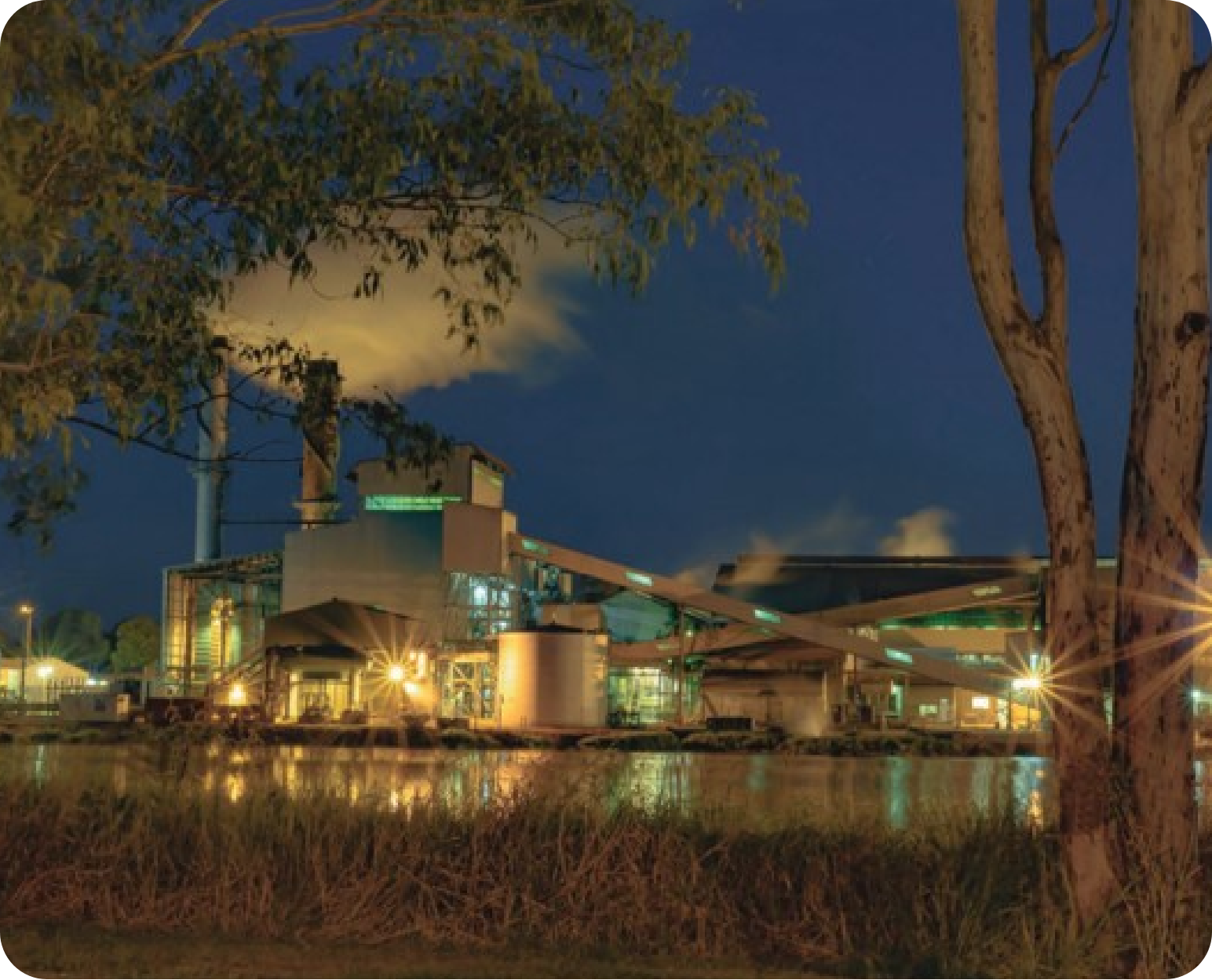
Project Swift proposes to develop a biorefinery in the Bundaberg region of Queensland, with a focus on the sustainable aviation fuel (SAF) market. Utilising Licella’s innovative Australian-developed Cat-HTR™ hydrothermal liquefaction (HTL) technology, the facility would transform agricultural by-products to Low Carbon Liquid Fuels (LCLF). Once complete, the proposed biorefinery could produce ~40 million litres of SAF each year, ~7% of the domestic airline industry’s 2030 SAF target. The facility has the potential to create hundreds of regional jobs and would provide a new and growing market for Queensland’s sugar industry to participate in.

Project Swift overview

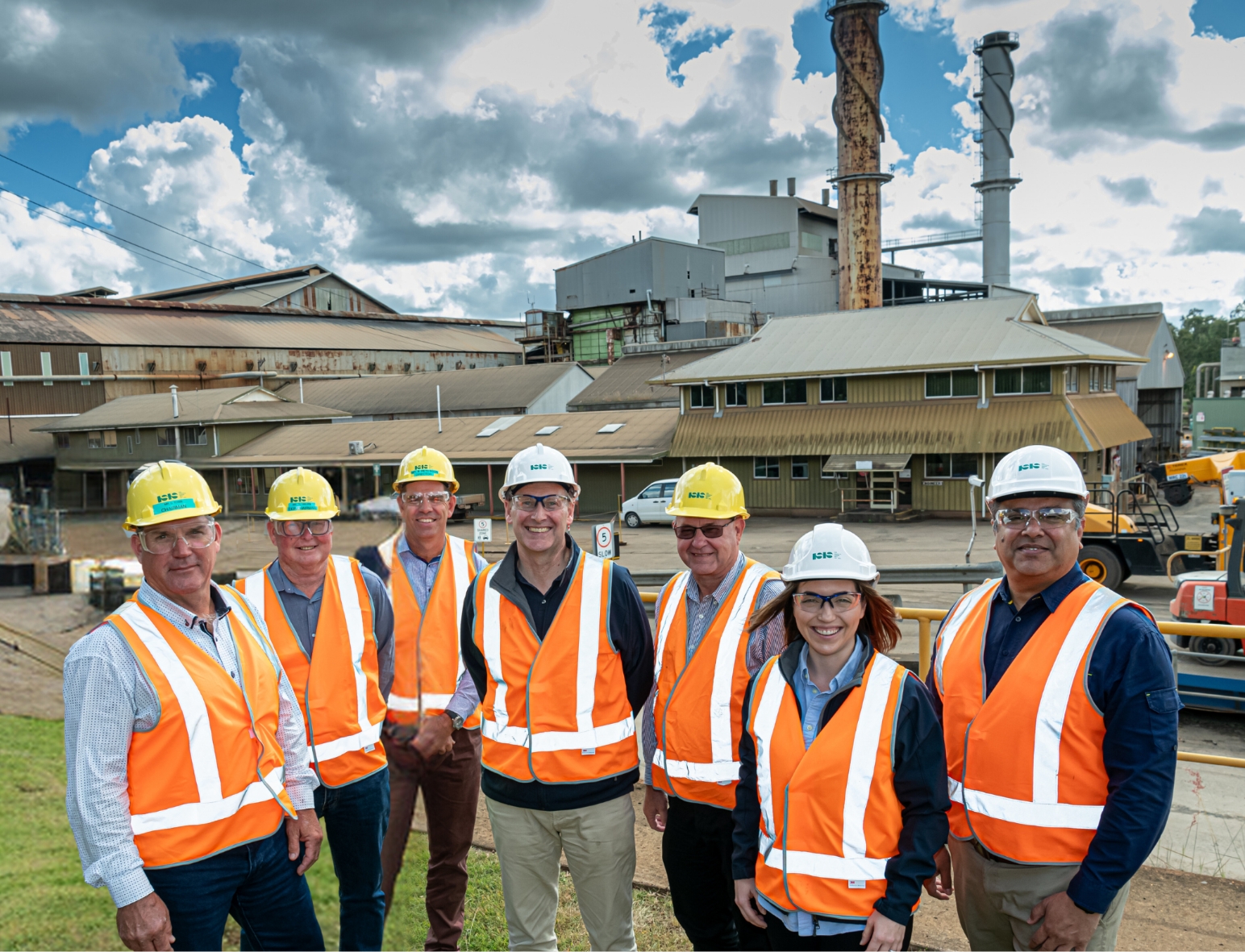
We are committed to inclusive project development that benefits the local community. Guided by our values of sustainability, innovation and respect, we are prioritising meaningful engagement, including with First Nations people.
  • Project phase: Feasibility Study – Pre-FEED, advancing to FEED (Front End Engineering Design)

  • Bundaberg region, Queensland

  • Feedstock: Agricultural residues (including bagasse) (150,000 tonnes/ year)

  • Capacity (annual): 56,000 tonnes bio-intermediate

  • ~60 million litres biofuels (~40 million litres SAF)

  • Supporting regional development and the local sugar industry. Potential for ~300 construction jobs and 100 new jobs during operations

  • Proudly delivering alongside our strategic partners including Shell, and with funding from the Australian Renewable Energy Agency (ARENA) as part of ARENA’s Advancing Renewables Program

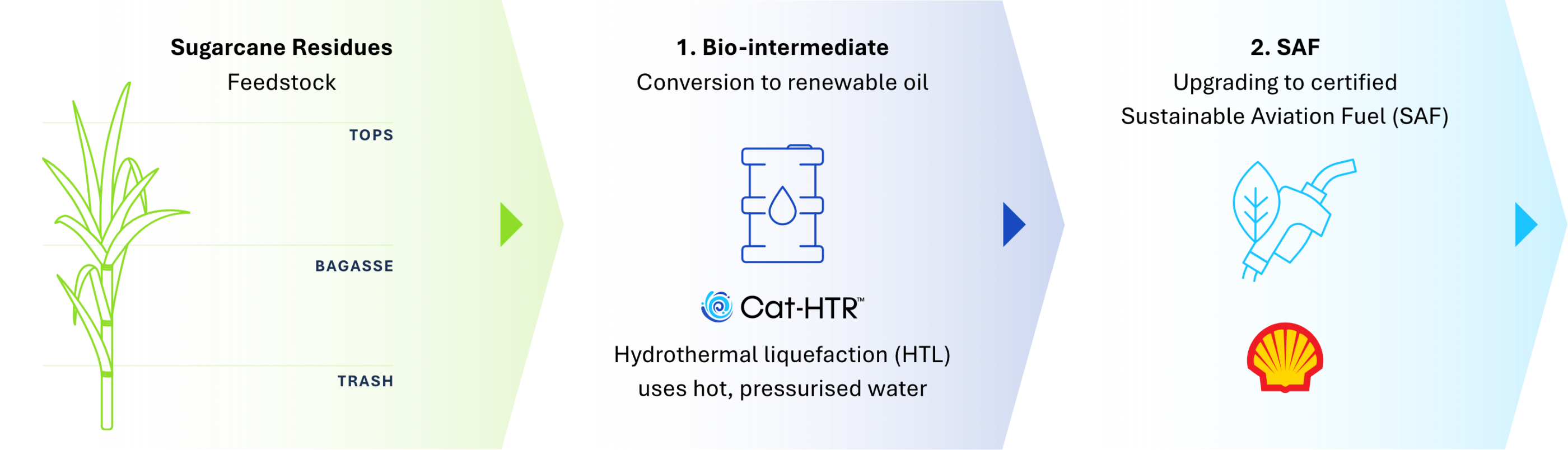
The biorefinery’s two-step process

Step 1: Our hydrothermal liquefaction (HTL) process transforms biomass feedstock into a bio-intermediate – a renewable substitute for fossil oil with a ~80% lower carbon intensity.

Step 2: The bio-intermediate is refined, using Shell’s upgrading technology, to advanced biofuels including sustainable aviation fuel (SAF).

How the Cat-HTR™ technology works

Our patented hydrothermal liquefaction (HTL) process transforms a range of abundant feedstocks into a liquid bio-intermediate, ready for upgrading into low carbon liquid fuels (LCLF) and biochemicals.

1 2 3 4 5 6 7

Community at the core

We are committed to partnering with the local community, working towards inclusive development and enabling new employment opportunities for the region.

Guided by our values of sustainability, innovation, and respect, we prioritise meaningful community engagement. By listening, learning, and acting together, we create connections that foster mutual growth and a future that benefits all.

Frequently asked questions

Understandably, we know you will have questions. Below we have collated some information that we hope is helpful.

We look forward to developing this as we commence conversations with the local community, and progress through our environmental permitting process.

Supported by the Australian Renewable Energy Agency (ARENA)

Licella are grateful to be delivering Project Swift with support from the Australian Renewable Energy Agency (ARENA).

Knowledge sharing is critical to accelerating Australia’s SAF industry, and we appreciate ARENA’s support as we advance our Queensland biomass-to-SAF project and commercialise our Australian HTL technology to benefit the local market.

Knowledge sharing initiatives that will be delivered during the project include:

  • Key findings from the feedstock assessments, Pre-FEED and FEED studies

  • Insights from Arbios’ Chuntoh Ghuna facility (Cat-HTR™ commercial facility in Canada under Licella’s JV with Canfor)

  • Lessons learnt on the SAF certification pathway

Acknowledgement

This Project received funding from the Australian Renewable Energy Agency (ARENA) as part of ARENA’s Advancing Renewables Program.

Disclaimer

The views expressed herein are not necessarily the views of the Australian Government, and the Australian Government does not accept responsibility for any information or advice contained herein.

A renewable oil used in place of fossil oil to produce a range of biomaterials and biochemicals, or advanced biofuels.

By using this website, you acknowledge that you have read and understand the Privacy Policy. It appears you're using an old version of Internet Explorer for safer and optimum browsing experience please upgrade your browser.